Cerebral Angiogram in Chennai at Bharath Specialty Hospital

Cerebral Angiogram

Your brain depends on a constant, healthy flow of blood to function. When the blood vessels supplying it become narrowed, blocked, weakened or abnormally formed, the results can be serious. These include sudden headaches, a stroke or even life-threatening bleeding in the brain. Getting an accurate diagnosis early is critical.

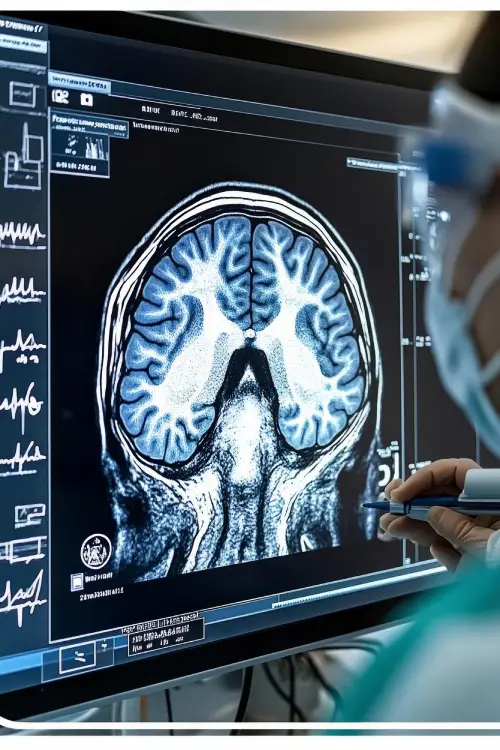
A cerebral angiogram is the most detailed test available for examining the blood vessels of the brain and neck. At Bharath Specialty Hospital, Chennai, our experienced specialists perform cerebral angiography in an advanced cath lab using high-resolution imaging. This helps us detect vascular problems precisely and plan the right treatment without delay.

What Is a Cerebral Angiogram?

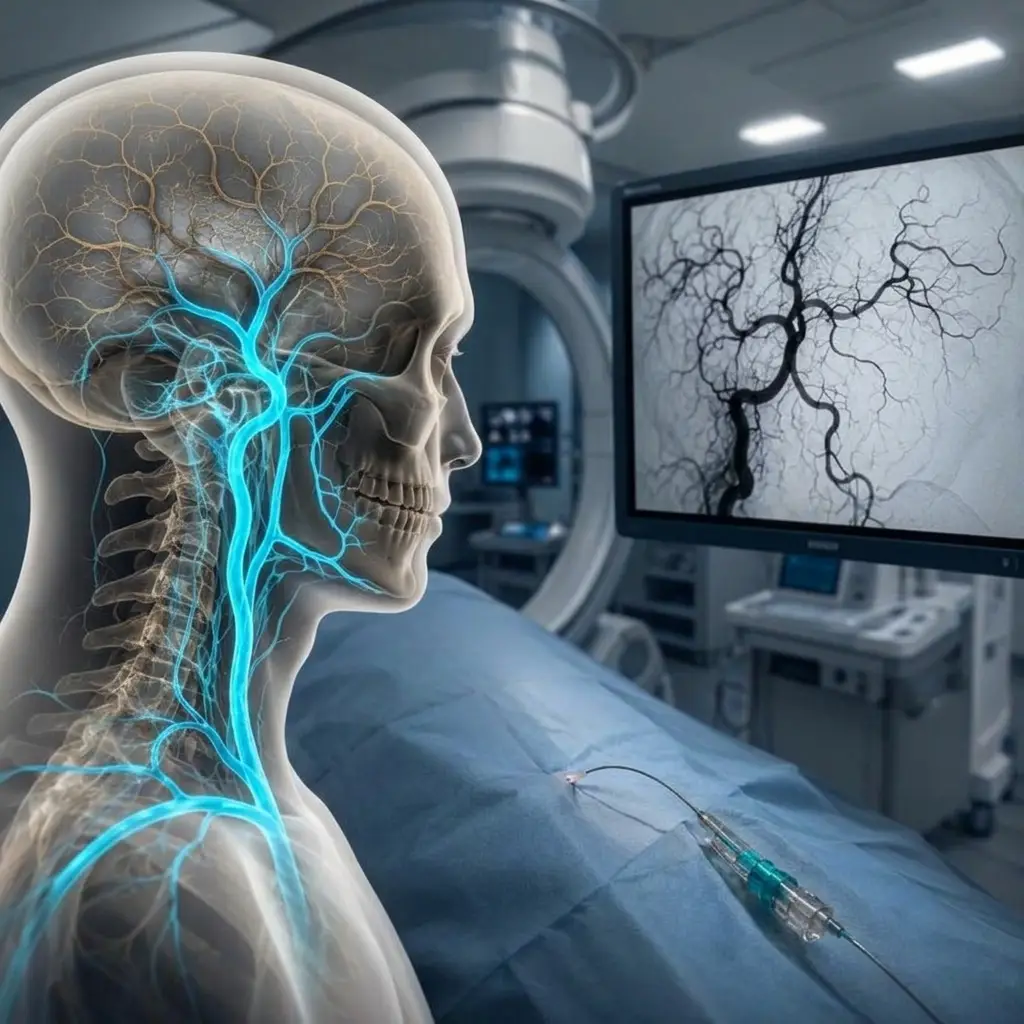
A cerebral angiogram, also called a brain angiogram or neuro-angiogram, is a minimally invasive imaging test. It shows the arteries and veins that carry blood to and from the brain. A thin catheter is guided to the neck arteries, and contrast dye is injected. As the dye flows through the vessels, real-time X-ray images capture every detail.

Modern cerebral angiography uses Digital Subtraction Angiography (DSA), a technique that digitally removes bone and surrounding tissue from the images. This leaves a crystal-clear view of the blood vessels alone. DSA is considered the gold standard for evaluating brain blood vessel disorders.

Coronary Artery Disease

Conditions Detected by Cerebral Angiography

A cerebral angiogram helps diagnose and assess:

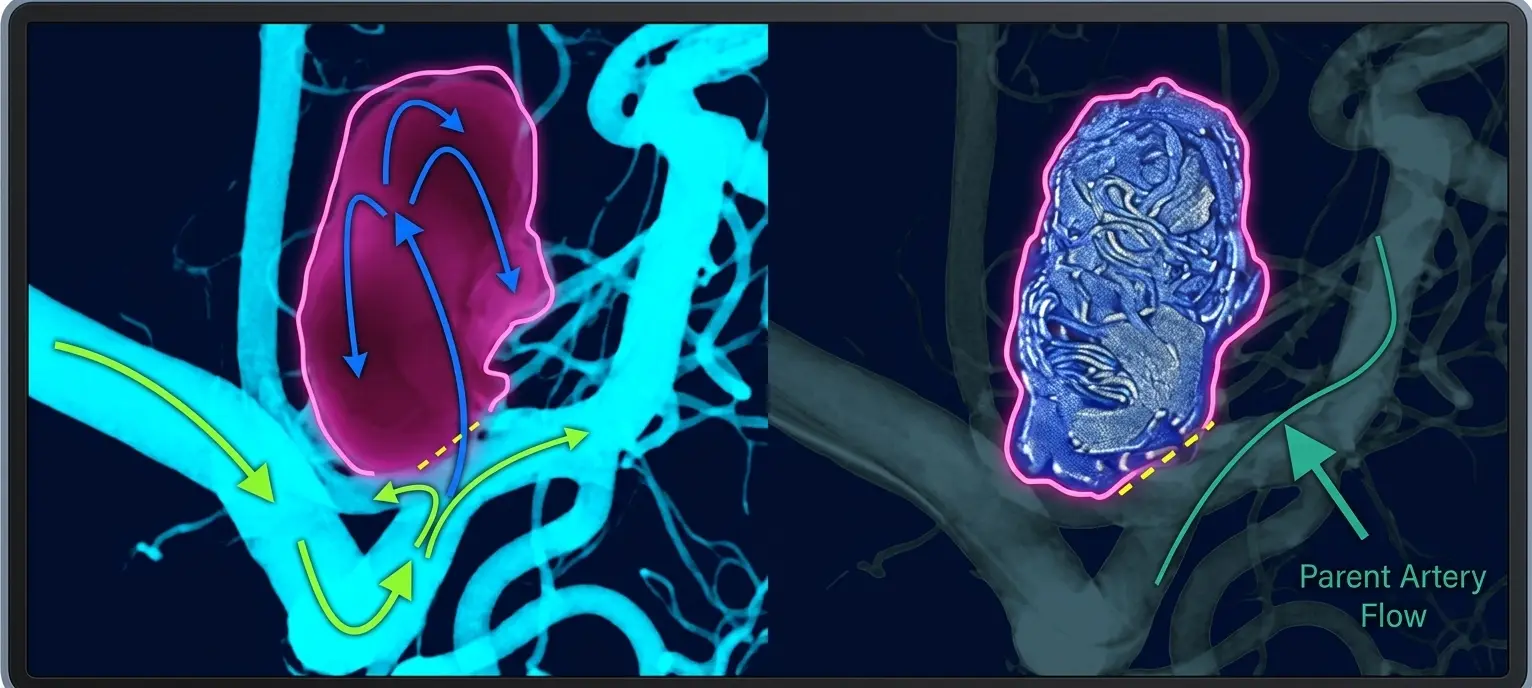
  • Brain aneurysms: Weak, ballooning spots in an artery wall that can rupture and cause bleeding.
  • Carotid artery stenosis: Narrowing of the main neck arteries due to plaque, a major cause of stroke.
  • Intracranial artery narrowing: Blockages in arteries inside the skull.
  • Arteriovenous malformations (AVM): Abnormal tangles of arteries and veins in the brain.
  • Dural arteriovenous fistulas: Abnormal connections between arteries and veins.
  • Ischemic stroke and TIA: Identifying the blocked or narrowed vessel.
  • Moyamoya disease and vasculitis: Rare conditions causing narrowing or inflammation of brain arteries.
  • Brain bleeding (haemorrhage): Finding the underlying vascular cause.

Who Needs a Cerebral Angiogram?

Your doctor may recommend a brain blood vessel test if you have:

  • A sudden, severe headache, often described as “the worst headache of my life”.
  • Stroke symptoms or a recent stroke.
  • A TIA (mini-stroke) with temporary weakness, numbness or speech problems.
  • Weakness or numbness in the face, arm or leg, especially on one side.
  • Sudden vision loss or double vision.
  • Dizziness, loss of balance or difficulty walking.
  • Slurred speech or trouble understanding speech.
  • A suspected aneurysm or AVM on a CT or MRI scan.
  • Significant carotid artery stenosis found on Doppler ultrasound.
  • Planning before carotid stenting, aneurysm treatment or brain surgery.

Recognise Stroke Warning Signs: BE FAST

  • B – Balance: Sudden loss of balance or coordination
  • E – Eyes: Sudden vision loss or blurring
  • F – Face: One side of the face drooping
  • A – Arm: Weakness or numbness in one arm
  • S – Speech: Slurred or confused speech
  • T – Time: Call for emergency help immediately (dial 108)

In a stroke, every minute counts. Rapid diagnosis and treatment can prevent permanent disability.

Non-Invasive Tests Before a Cerebral Angiogram

In many cases, our specialists first use non-invasive tests to screen the brain’s blood vessels:

Carotid Doppler ultrasound :

Checks blood flow in the neck arteries

MR angiography (MRA) :

Uses magnetic imaging, without radiation

CT angiography (CTA):

Uses a CT scan with contrast to image the vessels

If these tests show an abnormality or the results are unclear, a cerebral angiogram gives the most accurate, detailed information needed for treatment decisions.

How Is a Cerebral Angiogram Performed?

Before the Procedure

  • Our team reviews your medical history, medications, allergies and kidney function
  • You may be asked to fast for a few hours
  • Blood-thinning medicines may need adjusting, as advised by your doctor

During the Procedure

Coronary angiogram procedure in the cath lab Cerebral Angiogram
  1. 1
    Local anaesthesia: The wrist (radial artery) or groin (femoral artery) is numbed, and mild sedation may be given.
  2. 2
    Catheter insertion: A thin, flexible catheter is guided through the artery to the neck vessels under X-ray guidance.
  3. 3
    Contrast injection: Dye is injected into each artery supplying the brain. You may feel a brief warm sensation in your head or face.
  4. 4
    Imaging: THigh-resolution DSA images are captured from multiple angles, sometimes including 3D rotational images.
  5. 5
    Completion: The catheter is removed, and the access site is closed with a compression band or closure device.

The procedure usually takes 30 to 60 minutes.

Is a Cerebral Angiogram Safe?

A cerebral angiogram is a safe and well-established procedure when performed by experienced specialists. Minor bruising at the access site is common. Serious complications are uncommon, such as a stroke caused by the procedure, an allergic reaction to the dye, kidney strain, bleeding or injury to the artery. Our team takes every precaution to minimise risk, especially in elderly patients and those with diabetes or kidney disease.

Recovery After a Cerebral Angiogram

  • You will be monitored for a few hours after the test
  • Most patients go home the same day or the next day
  • Drink plenty of fluids to help flush out the contrast dye
  • Avoid heavy lifting or strenuous activity for 2–3 days
  • Keep the access site clean and dry
  • Report any sudden headache, weakness, vision changes, bleeding or swelling immediately

Understanding Your Results and Next Steps

Your doctor will explain the findings clearly and discuss treatment options, which may include:

  • Medical management: Blood thinners, cholesterol and blood pressure control.
  • Carotid stenting or carotid endarterectomy: To treat significant neck artery narrowing.
  • Endovascular aneurysm coiling or flow diversion: To prevent an aneurysm from rupturing.
  • AVM embolisation or surgery: To treat abnormal vessel tangles.
  • Mechanical thrombectomy: Emergency clot removal in acute stroke.

Benefits of Cerebral Angiography

  • The most accurate imaging of the brain and neck blood vessels
  • Reliable brain aneurysm diagnosis, including very small aneurysms
  • Precise identification of blocked or narrowed arteries
  • Better treatment planning for stroke, aneurysms and AVMs
  • Can be combined with treatment in the same session when appropriate
  • Can be combined with treatment in the same session when appropriate

Why Choose Bharath Specialty Hospital for Cerebral Angiogram in Chennai?

Experienced interventional specialists in neurovascular imaging
An advanced cath lab with high-resolution DSA and 3D imaging
Coordinated care among cardiology, neurology and neurosurgery teams
Emergency stroke care, with rapid evaluation
Wrist (radial) access for greater comfort when suitable
Transparent costs, with insurance and cashless assistance

Frequently Asked Questions

No. It is done under local anaesthesia. You may feel a brief warm sensation when the dye is injected.

Usually 30–60 minutes, followed by a few hours of observation.

CTA and MRA are good screening tests, but a cerebral angiogram (DSA) gives the most detailed and accurate images, especially for small aneurysms and complex vessel problems.

Most insurance plans cover it when it is medically necessary. Our insurance desk will help with approvals.

Book a Consultation Today

Sudden headaches, stroke symptoms or abnormal scan results need expert attention. Consult the specialists at Bharath Specialty Hospital, Chennai for an accurate and safe cerebral angiogram. Call +91 8905890534 to book an appointment, or dial 108 in an emergency.

Call Our Team WhatsApp Us
Quick Links

Find the care and information you need

Browse our cardiac procedures, clinical departments, hospital facilities, and helpful resources.

Visit Our Hospital

No 7, Pari Towers, 7, 1st Main Rd, Macmillan Colony, Nanganallur, Chennai, Tamil Nadu 600061.

Get Directions
whatsapp
Call us