Radiofrequency Ablation (RFA) in Chennai at Bharath Specialty Hospital

Cerebral Angiogram

Living with a racing or irregular heartbeat can be frightening and exhausting. Sudden palpitations, dizziness and the fear of the next episode can take over daily life. Many patients depend on lifelong medicines that only control the symptoms without fixing the cause.

Radiofrequency ablation (RFA) changes that. It is a minimally invasive procedure that targets and eliminates the exact source of an abnormal heart rhythm, offering many patients a permanent cure. At Bharath Specialty Hospital, Chennai, our experienced cardiac electrophysiology team performs catheter ablation for arrhythmia in an advanced electrophysiology lab, with precision, safety and patient comfort at the centre of everything we do.

What Is Radiofrequency Ablation?

Radiofrequency ablation, also called cardiac ablation or catheter ablation, is a non-surgical treatment for certain heart rhythm disorders. Thin, flexible catheters are guided into the heart through a vein, usually in the groin. Once the abnormal electrical pathway or “hot spot” causing the arrhythmia is located, a special catheter delivers controlled radiofrequency energy (heat) to a tiny area of tissue. This creates a small scar that blocks the faulty electrical signals, restoring a normal heart rhythm.

RFA is almost always performed together with an Electrophysiological Study (EPS). The EPS maps the heart’s electrical system and pinpoints the exact target for ablation.

Heart’s Electrical System

Heart Rhythm Disorders Treated with RFA

An arrhythmia develops when the electrical signals are disrupted. Common causes include:

  • Supraventricular Tachycardia (SVT): Sudden episodes of a very fast heartbeat, including AVNRT and AVRT
  • WPW Syndrome: An extra electrical pathway present from birth that can cause dangerous fast rhythms
  • Atrial Flutter: A rapid, organised rhythm in the upper chambers
  • Atrial Fibrillation (AF): An irregular, often rapid heartbeat that raises the risk of stroke
  • Atrial Tachycardia: A fast rhythm arising from a single spot in the atria
  • Ventricular Tachycardia (VT): A potentially life-threatening fast rhythm from the lower chambers
  • Frequent Premature Ventricular Contractions (PVCs): Extra beats that cause symptoms or weaken the heart

Symptoms That May Need Ablation

  • Sudden episodes of a racing or pounding heartbeat
  • Palpitations that start and stop abruptly
  • Dizziness, light-headedness or fainting
  • Breathlessness or chest discomfort during episodes
  • Fatigue and reduced exercise capacity
  • Anxiety or a fluttering sensation in the chest

Who Needs Radiofrequency Ablation?

Your electrophysiologist may recommend RFA if you have:

  • Recurrent SVT, atrial flutter or WPW syndrome
  • Arrhythmias that don’t respond well to medication
  • Side effects from, or unwillingness to take, long-term rhythm medicines
  • WPW syndrome with a high-risk pathway
  • Atrial fibrillation with troublesome symptoms despite treatment
  • Ventricular tachycardia or frequent PVCs affecting heart function
  • Recurrent ICD shocks due to VT
  • An occupation where sudden palpitations could be dangerous, such as pilots, drivers and athletes

How Is Radiofrequency Ablation Done?

Before the Procedure

  • A detailed evaluation with ECG, Holter monitoring, echocardiography and blood tests
  • Fasting for 6–8 hours before the procedure
  • Some rhythm medicines may be stopped a few days beforehand, as advised
  • Blood-thinner management for AF patients, as directed by your doctor

During the Procedure

Coronary angiogram procedure in the cath lab Radiofrequency Ablation (RFA)
  1. 1
    Anaesthesia: Local anaesthesia with mild sedation is used for most procedures. General anaesthesia may be used for complex ablations.
  2. 2
    Catheter insertion: Thin catheters are guided through the veins in the groin into the heart under X-ray guidance.
  3. 3
    Electrophysiological study: The heart’s electrical signals are recorded, and the arrhythmia may be triggered safely to study it.
  4. 4
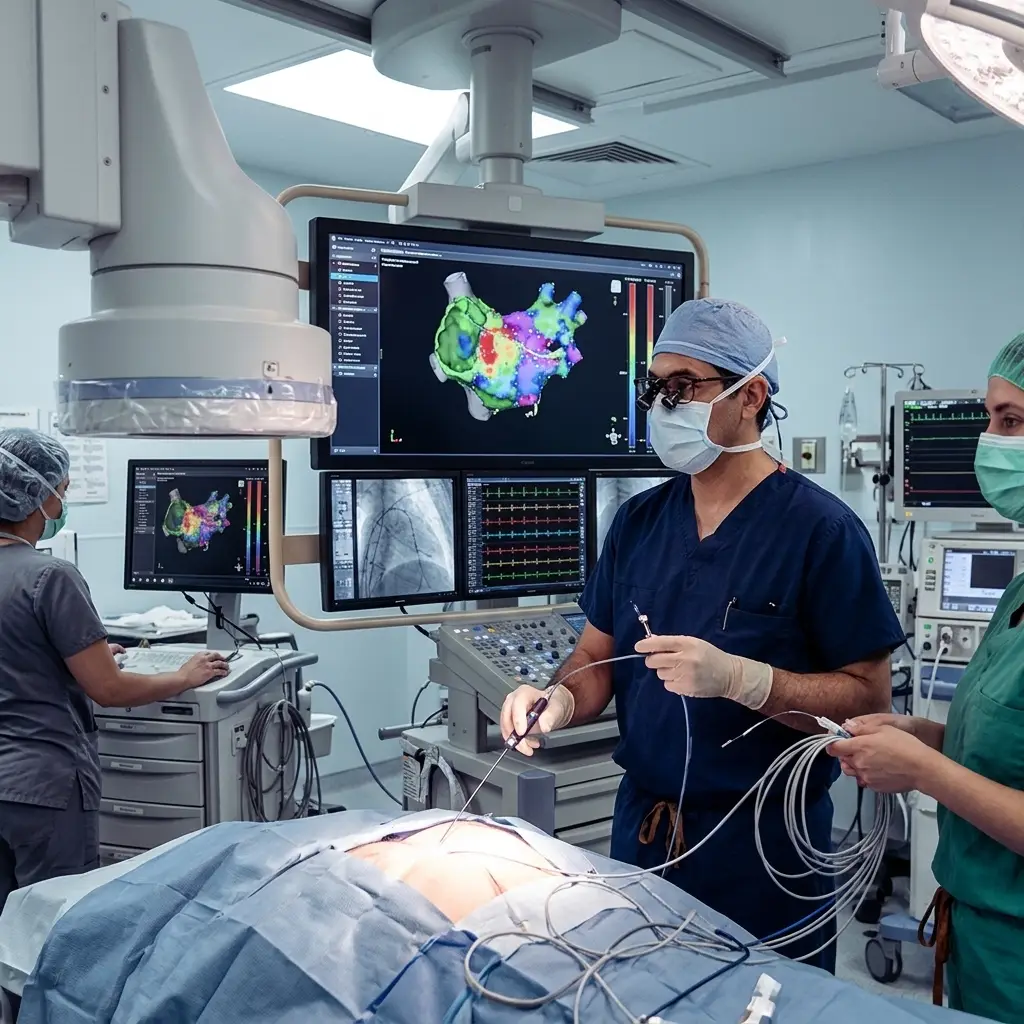
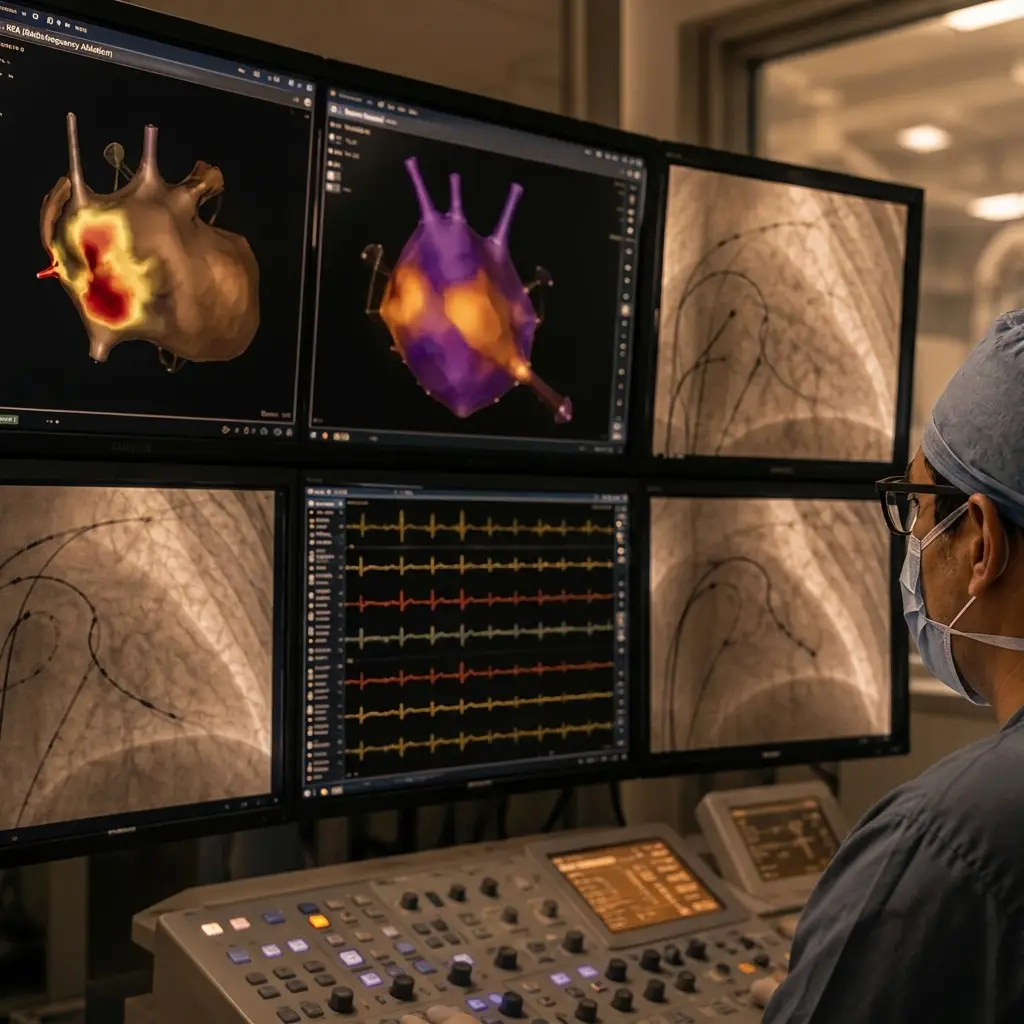
    Mapping: Advanced 3D mapping systems may be used to create a detailed electrical map of the heart and locate the exact source.
  5. 5
    Ablation: Radiofrequency energy is delivered through the catheter tip to the targeted tissue. Most patients feel little or no discomfort; some feel mild warmth in the chest.
  6. 6
    Confirmation: Tests are repeated to confirm that the abnormal pathway has been eliminated and the arrhythmia can no longer be triggered.
  7. 7
    Completion: TThe catheters are removed, and pressure is applied to the access site.

The procedure typically takes 2 to 4 hours, depending on the type of arrhythmia.

3D Mapping Ablation: Precision for Complex Rhythms

For complex arrhythmias such as atrial fibrillation, atrial tachycardia and VT, 3D mapping ablation creates a detailed three-dimensional electrical map of the heart. This allows the specialist to target abnormal areas with millimetre precision, improving success rates and reducing X-ray exposure.

Success Rates of Radiofrequency Ablation

RFA is one of the most successful treatments in cardiology:

  • SVT and WPW syndrome: Over 95% success, often a permanent cure
  • Typical atrial flutter: Around 95% success
  • Atrial fibrillation: Good results, especially in early (paroxysmal) AF. Some patients may need a repeat procedure.
  • VT and PVCs: Significant reduction in episodes for many patients

Your electrophysiologist will discuss the expected results for your specific condition.

Benefits of Radiofrequency Ablation

  • A potential permanent cure for many arrhythmias
  • Reduces or eliminates the need for lifelong medicines
  • Minimally invasive, with no surgical incision
  • Diagnosis (EPS) and treatment in a single session
  • Short hospital stay and quick recovery
  • Lower risk of complications from untreated arrhythmias
  • Better energy, exercise capacity and quality of life
  • Freedom from the fear of sudden palpitations

Is Radiofrequency Ablation Safe?

RFA is a safe, well-established procedure when performed by experienced electrophysiologists. Minor bruising at the access site is common. Rare complications include bleeding, infection, injury to blood vessels, fluid around the heart, blood clots or stroke. Damage to the heart’s normal conduction system is also rare, but may require a pacemaker. Our team carefully evaluates each patient and takes every precaution to keep the risks as low as possible.

Recovery After Radiofrequency Ablation

  • Rest lying flat for a few hours to allow the access site to heal
  • Most patients are discharged within 24 hours
  • Light activities can usually be resumed within 2–3 days
  • Avoid heavy lifting and strenuous exercise for about a week
  • Mild chest discomfort or occasional skipped beats may occur temporarily as the heart heals
  • Attend follow-up visits, with an ECG or Holter monitoring as advised

Why Choose Bharath Specialty Hospital for RFA in Chennai?

An experienced electrophysiologist in Chennai with expertise in simple and complex ablations
An advanced electrophysiology lab with modern recording and 3D mapping systems
Comprehensive heart rhythm care, including EPS, ablation, pacemakers and ICDs
A dedicated cardiac care unit for close post-procedure monitoring
A personalised treatment approach with clear counselling
Transparent costs, with insurance and cashless support

Frequently Asked Questions

Most patients feel little or no pain. Local anaesthesia and sedation keep you comfortable, and some feel mild warmth during energy delivery.

Many patients with SVT, WPW or atrial flutter can stop rhythm medicines after successful ablation. Your doctor will advise you based on your condition.

Recurrence is uncommon for SVT and WPW. It is somewhat more likely with AF, and a repeat procedure may sometimes be needed.

Most insurance plans cover radiofrequency ablation. Our insurance desk will assist with approvals.

Book a Consultation Today

Don’t let palpitations control your life. Discover whether radiofrequency ablation can cure your heart rhythm disorder. Consult the electrophysiology specialists at Bharath Specialty Hospital, Chennai. Call +91 8905890534 to book your appointment.

Call Our Team WhatsApp Us
Quick Links

Find the care and information you need

Browse our cardiac procedures, clinical departments, hospital facilities, and helpful resources.

Visit Our Hospital

No 7, Pari Towers, 7, 1st Main Rd, Macmillan Colony, Nanganallur, Chennai, Tamil Nadu 600061.

Get Directions
whatsapp
Call us