
Visit Our Hospital
No 7, Pari Towers, 7, 1st Main Rd, Macmillan Colony, Nanganallur, Chennai, Tamil Nadu 600061.
Get Directions
Breathlessness while climbing stairs, constant tiredness, or a racing heartbeat may be more than just signs of a busy life. For many people in India, especially young adults and women, these symptoms are caused by mitral stenosis, a narrowing of the heart’s mitral valve, usually due to rheumatic heart disease.
Percutaneous Transvenous Mitral Commissurotomy (PTMC) is a highly effective, minimally invasive procedure that opens the narrowed mitral valve with a balloon. It offers mitral valve treatment without surgery. At Bharath Specialty Hospital, Chennai, our experienced structural heart specialists perform PTMC in an advanced cath lab, helping patients breathe freely and return to normal life within days.
The mitral valve sits between the heart’s upper left chamber (left atrium) and lower left chamber (left ventricle). It opens to let oxygen-rich blood flow forward and closes to stop it from flowing back.
In mitral stenosis, the valve leaflets become thickened and fused at their edges (commissures), so the valve cannot open fully. Blood backs up into the left atrium and lungs. This causes breathlessness, raises pressure in the lungs and strains the heart.
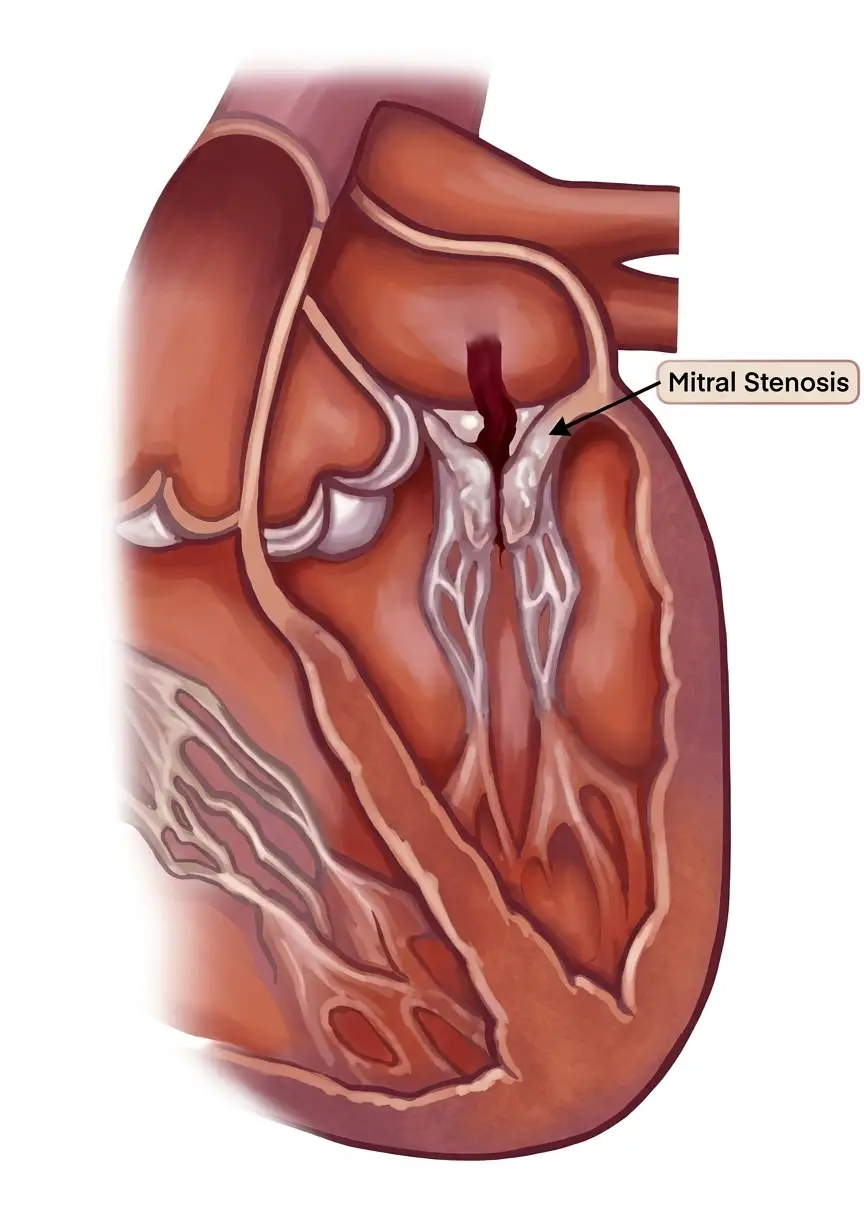
Symptoms often worsen during pregnancy, fever or infection, because the heart’s workload increases.
PTMC, also known as Balloon Mitral Valvotomy (BMV) or Percutaneous Balloon Mitral Valvuloplasty (PBMV), is a catheter-based procedure that widens a narrowed mitral valve. A special balloon, most commonly the Inoue balloon, is guided into the valve and inflated. This gently splits the fused commissures and enlarges the valve opening.
The result is an immediate improvement in blood flow from the left atrium to the left ventricle, with rapid relief of symptoms, all without opening the chest.
Your cardiologist may recommend PTMC if you have:
Our specialists use a detailed echocardiographic scoring system (such as the Wilkins score) to assess valve flexibility, thickening, calcium and the structures beneath the valve. This helps predict how well PTMC will work for you.
How Is PTMC Planned?
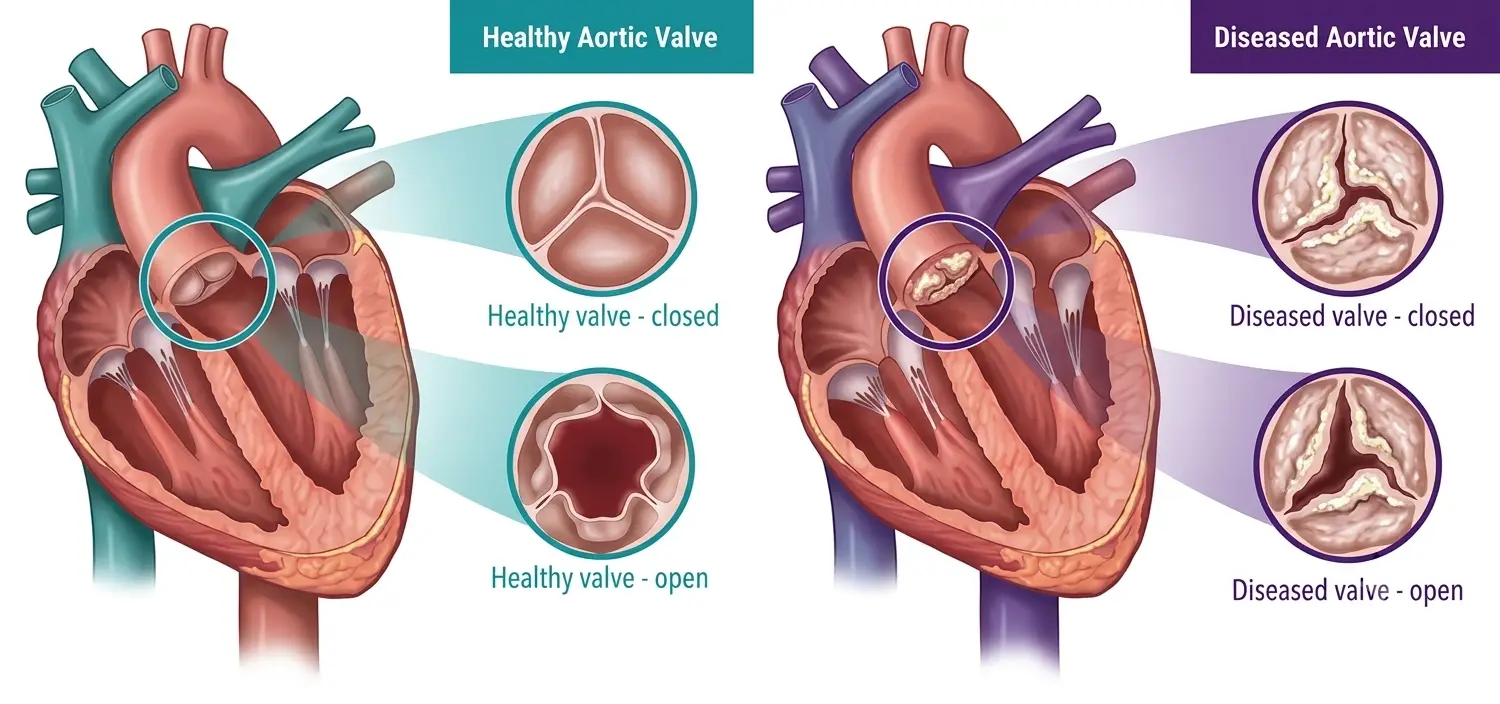 PTMC (Balloon Mitral Valvotomy)
The procedure usually takes 1 to 2 hours. The small opening in the septum typically heals on its own over time.
| Feature | PTMC | Surgical Valve Repair/Replacement |
|---|---|---|
| Chest incision | None | Yes |
| Anaesthesia | Local with sedation | General |
| Hospital stay | 1–2 days | 5–7 days or more |
| Recovery | A few days | Several weeks |
| Long-term blood thinners | Usually not needed (unless AF) | Often lifelong after mechanical valve |
For patients with suitable valve anatomy, PTMC gives results comparable to surgical commissurotomy, with far less trauma and a faster recovery.
PTMC is a safe, well-established procedure, with excellent results in experienced hands. Rare complications include new or worsened mitral valve leakage, which may need surgery, fluid around the heart, stroke, irregular heart rhythms and bleeding at the access site. Careful patient selection, TEE screening for clots and imaging guidance help keep the risks very low.
Don’t let mitral stenosis limit your life. Discover whether PTMC can help you breathe easier, without open-heart surgery. Consult the structural heart specialists at Bharath Specialty Hospital, Chennai. Call +91 8905890534 to book your appointment.
Call Our Team WhatsApp UsBrowse our cardiac procedures, clinical departments, hospital facilities, and helpful resources.
No 7, Pari Towers, 7, 1st Main Rd, Macmillan Colony, Nanganallur, Chennai, Tamil Nadu 600061.
Get DirectionsSpeak with our team to arrange your appointment.
044 - 4770 7071 044 4781 7330 +91 89058 90534For general enquiries, connect with our hospital team by email or WhatsApp.
bshospitalao@gmail.com bshospitalreception@gmail.com +91 89058 90534Follow our updates, explore patient stories, and learn more about our care.
Review us on Google Official Website
