Sudden cardiac arrest strikes without warning. It is one of the leading causes of death worldwide. It happens when the heart suddenly develops a chaotic, dangerously fast rhythm and stops pumping blood effectively. Without immediate treatment, it can be fatal within minutes.
For people at high risk, an Implantable Cardioverter Defibrillator (ICD) acts as a personal, round-the-clock lifeguard for the heart. At Bharath Specialty Hospital, Chennai, our experienced cardiac rhythm specialists perform ICD implantation in an advanced cath lab, giving patients powerful, lifesaving protection and peace of mind.
What Is an ICD?
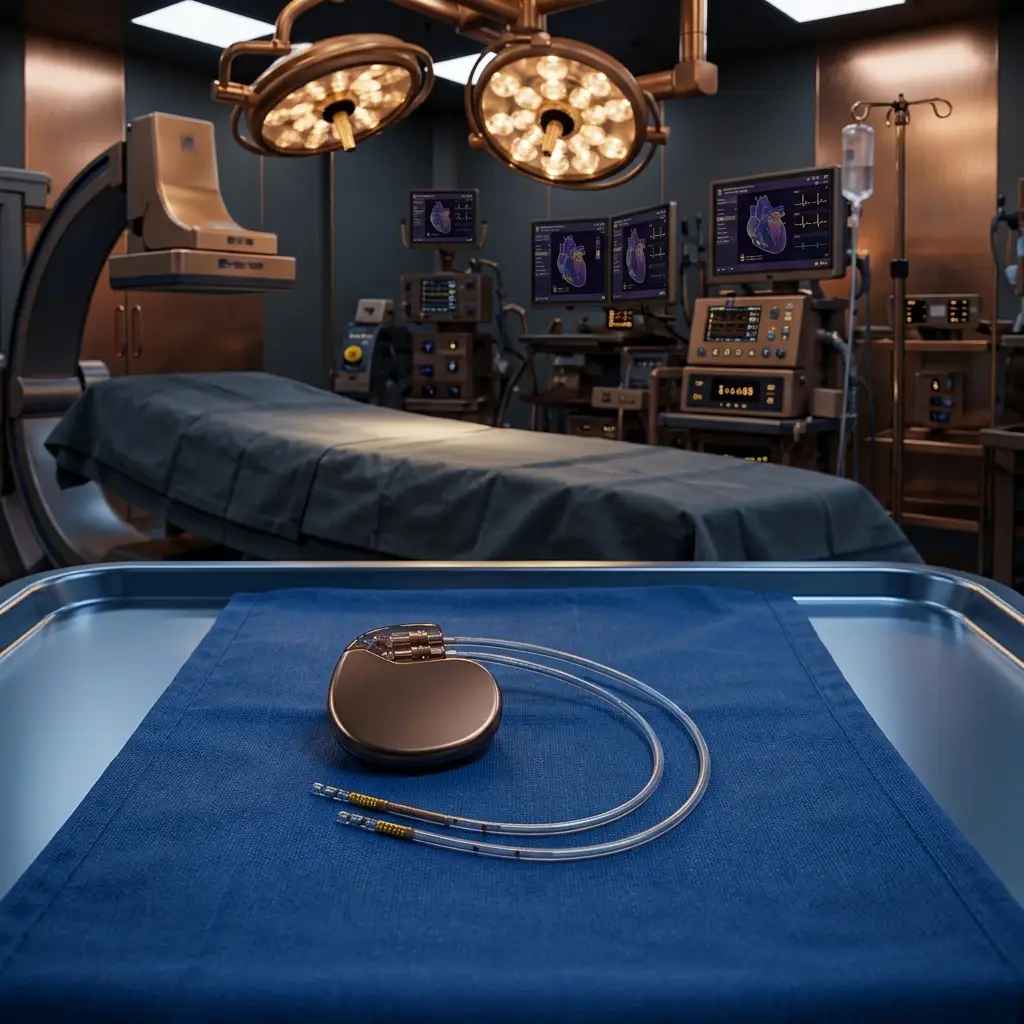
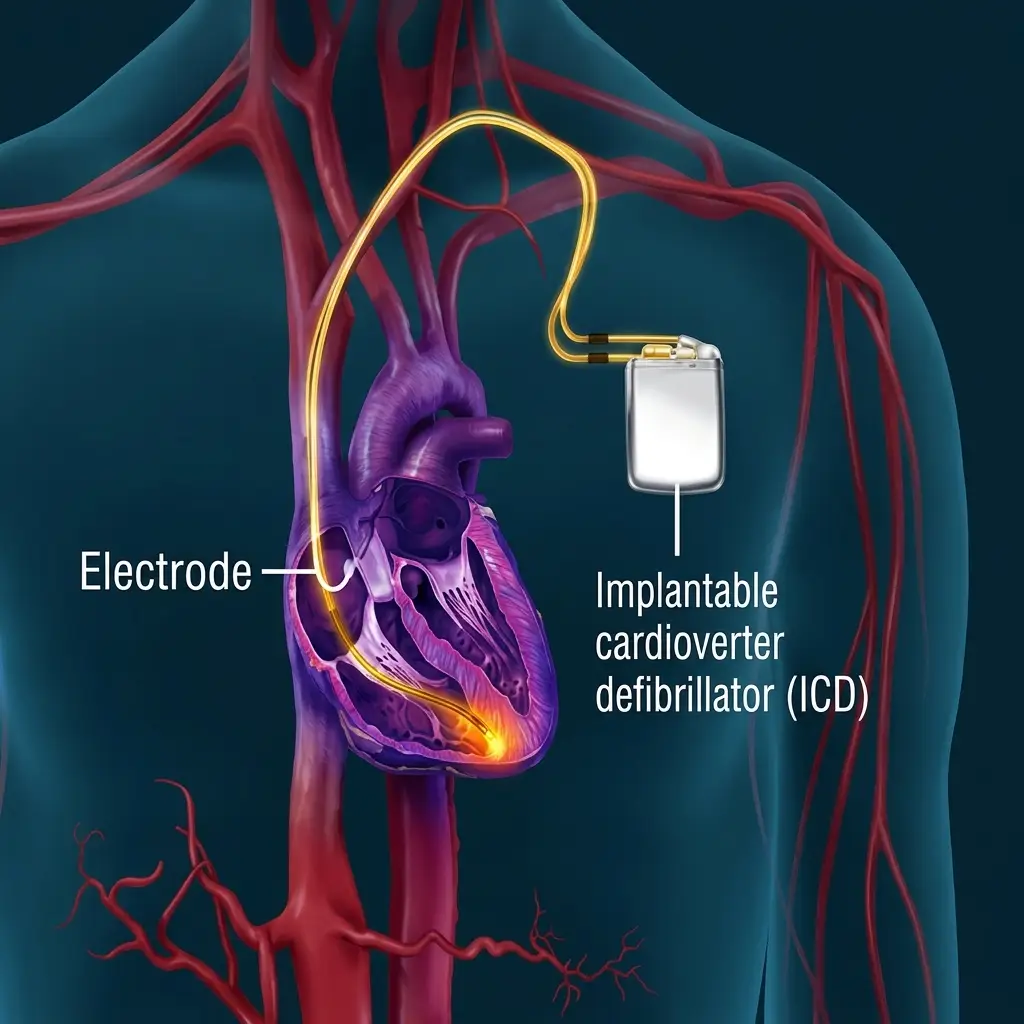
An Implantable Cardioverter Defibrillator (ICD) is a small, battery-powered device placed under the skin, usually below the left collarbone. It continuously monitors your heart rhythm. If it detects a life-threatening arrhythmia, it automatically delivers treatment to restore a normal heartbeat within seconds.
An ICD has two main parts:
- Pulse generator: Contains a battery, a capacitor and a computer chip that monitors the heart and delivers therapy
- Leads: Thin, insulated wires that connect the generator to the heart, sensing the rhythm and delivering electrical energy
How Does an ICD Work?
An ICD can provide three types of therapy, depending on the rhythm it detects:
- Anti-tachycardia pacing (ATP): A series of rapid, painless pulses to stop a fast heart rhythm
- Cardioversion and defibrillation: A stronger electrical shock to reset the heart during ventricular tachycardia or ventricular fibrillation
- Pacing:Works like a pacemaker to correct a heartbeat that is too slow
The device also stores detailed records of your heart rhythm, which your doctor reviews during follow-up visits.
Understanding Dangerous Heart Rhythms
- Ventricular Tachycardia (VT): A very fast rhythm from the lower chambers that can lead to collapse
- Ventricular Fibrillation (VF): A chaotic quivering of the lower chambers, where the heart cannot pump blood. This is the most common cause of sudden cardiac death.
These rhythms need immediate treatment. An ICD responds within seconds, far faster than emergency services can arrive.
Who Needs an ICD?
ICDs are recommended for two groups of patients.
Secondary Prevention (Already Had an Event)
- Survivors of sudden cardiac arrest
- Patients who have had sustained ventricular tachycardia or ventricular fibrillation
- Unexplained fainting with a suspected dangerous arrhythmia
Primary Prevention (High Risk, No Event Yet)
- Low ejection fraction (weak heart pumping, typically 35% or below) despite optimal medical treatment
- Heart failure due to a previous heart attack or cardiomyopathy
- Hypertrophic cardiomyopathy with high-risk features
- Inherited rhythm disorders such as Long QT syndrome and Brugada syndrome
- Arrhythmogenic right ventricular cardiomyopathy (ARVC)
- A strong family history of sudden cardiac death
Your cardiologist will use tests such as an ECG, echocardiogram, Holter monitoring, cardiac MRI and sometimes an Electrophysiological Study (EPS) to assess your risk.
Warning Signs That Need Evaluation
- Unexplained fainting or near-fainting
- Episodes of a rapid, pounding heartbeat
- Sudden dizziness or light-headedness
- Breathlessness and fatigue from heart failure
- A history of heart attack with a weakened heart
Types of ICDs
- Single chamber ICD: One lead placed in the right ventricle
- Dual chamber ICD: Leads in the right atrium and right ventricle, for better rhythm detection and pacing
- Biventricular ICD (CRT-D): Combines defibrillation with cardiac resynchronisation therapy to help both ventricles pump together, ideal for selected heart failure patients
- Subcutaneous ICD (S-ICD): Placed entirely under the skin, with no leads inside the heart or blood vessels. This is suitable for selected patients, especially younger individuals.
How Is ICD Implantation Done?
Before the Procedure
- Blood tests, ECG and echocardiogram
- Fasting for 6–8 hours
- Blood thinners may be adjusted as advised
During the Procedure
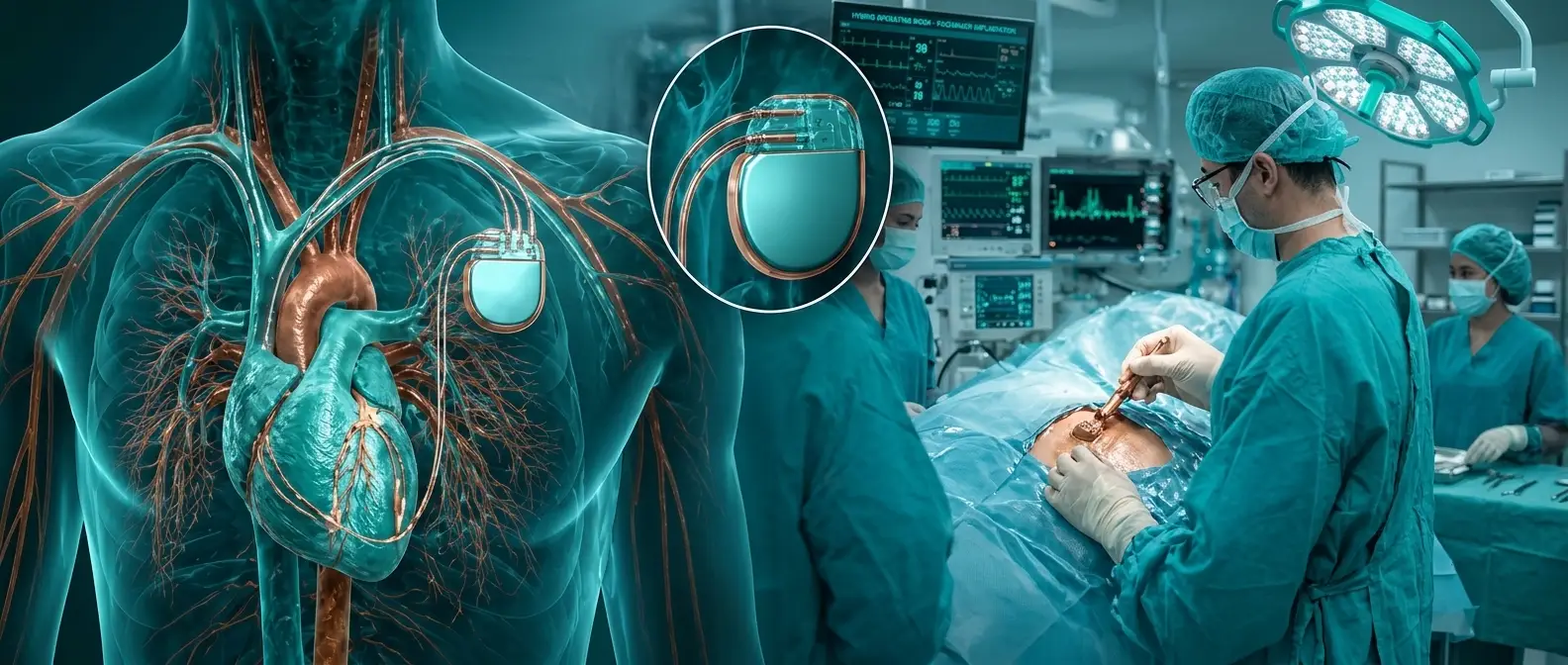 ICD Implantation
- 1
Anaesthesia: Local anaesthesia with sedation, or general anaesthesia in some cases.
- 2
Lead placement: One or more leads are guided through a vein into the heart under X-ray guidance.
- 3
Testing: The leads are tested for proper sensing and function.
- 4
Generator placement: The ICD is connected to the leads and placed in a small pocket under the skin.
- 5
Programming: The device is programmed to recognise and treat your specific rhythm problems.
- 6
Closure:: The incision is closed with stitches or surgical glue.
The procedure usually takes 1 to 3 hours, depending on the type of device.
Recovery After ICD Implantation
- Most patients are discharged within 1–2 days
- Mild soreness at the implant site settles within a few days
- Avoid raising the arm on the implant side above shoulder level for 4–6 weeks
- Avoid heavy lifting and strenuous upper-body activity during this time
- Keep the wound clean and dry until it heals
- Follow your doctor’s advice on driving, which may be restricted for a period
What Should You Do If Your ICD Delivers a Shock?
- A single shock, and you feel well: Sit down, rest and inform your doctor the same day
- Multiple shocks, or you feel unwell (chest pain, breathlessness, confusion): Call 108 or go to the nearest emergency department immediately
A shock may feel like a sudden thump in the chest. It lasts only a second and means the device is doing its job.
Living with an ICD: Precautions
- Keep mobile phones at least 15 cm away from the device
- Carry your ICD identification card at all times
- Inform airport security, and avoid lingering at security gates
- Stay away from strong magnets and high-voltage equipment
- Inform all doctors and dentists about your device
- Attend regular device check-ups every 3–6 months
- Take your heart medicines regularly
ICD Battery Life and Follow-Up
ICD batteries typically last 6 to 10 years, depending on how often the device delivers therapy. Regular follow-up checks the battery, the leads and stored rhythm events. When the battery runs low, the generator is replaced in a simple procedure. Many ICDs support remote monitoring, which lets your doctor track the device from home.
Benefits of ICD Implantation
- Lifesaving protection against sudden cardiac arrest
- Automatic, immediate treatment of dangerous rhythms
- Significantly lower risk of sudden cardiac death in high-risk patients
- Pacing support for slow heart rhythms
- Better heart function in heart failure patients (CRT-D)
- Continuous heart rhythm monitoring and data recording
- Peace of mind for patients and families
Is ICD Implantation Safe?
ICD implantation is a well-established and safe procedure. Rare complications include infection, bleeding, lead displacement, a collapsed lung, or shocks delivered when they aren’t needed. Our team follows strict sterile protocols and carefully programs each device to reduce unnecessary shocks.
Why Choose Bharath Specialty Hospital for ICD Implantation in Chennai?
An experienced electrophysiologist in Chennai specialising in advanced device therapy
An advanced cath lab with modern imaging and device programming systems
A full range of devices: single and dual chamber ICDs, CRT-D and S-ICD
Comprehensive heart failure and rhythm care under one roof
A dedicated device clinic with remote monitoring support
Transparent ICD cost in Chennai, with insurance and cashless assistance
Frequently Asked Questions
No. It is done under anaesthesia. Mild soreness afterward settles within a few days.
Yes. Most patients return to work, travel and daily activities, with a few simple precautions.
A pacemaker treats slow heartbeats. An ICD treats life-threatening fast rhythms with pacing or shocks, and can also work as a pacemaker.
Most insurance plans and government schemes cover ICD implantation. Our insurance desk will help with approvals.